This section collects archival documents, critical contributions, and essayistic materials dedicated to the work of Gastone Rinaldi, in a thoughtful and evolving selection, aimed at investigating the production dynamics and the historical-cultural context of Italian design in which Rinaldi operated.
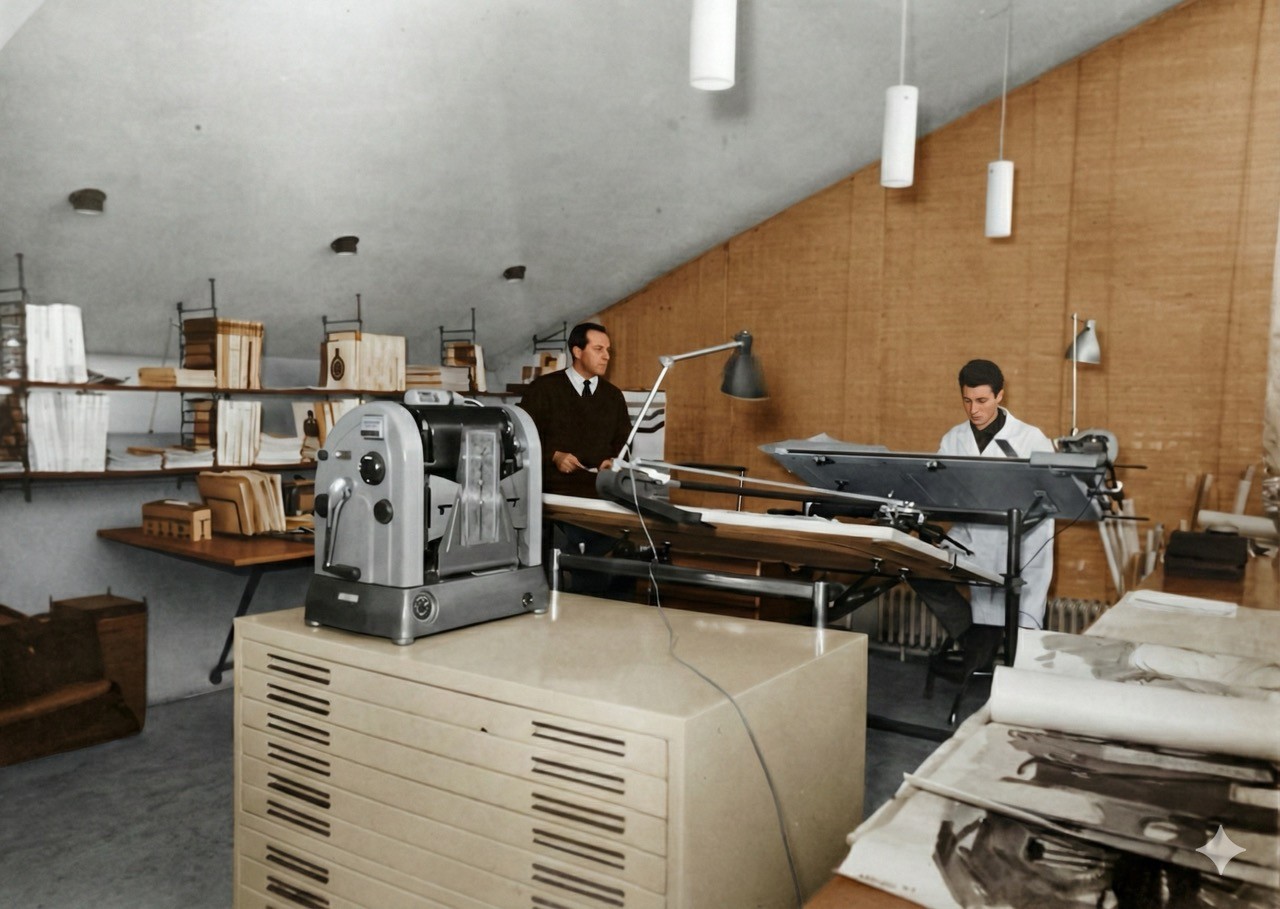
Article
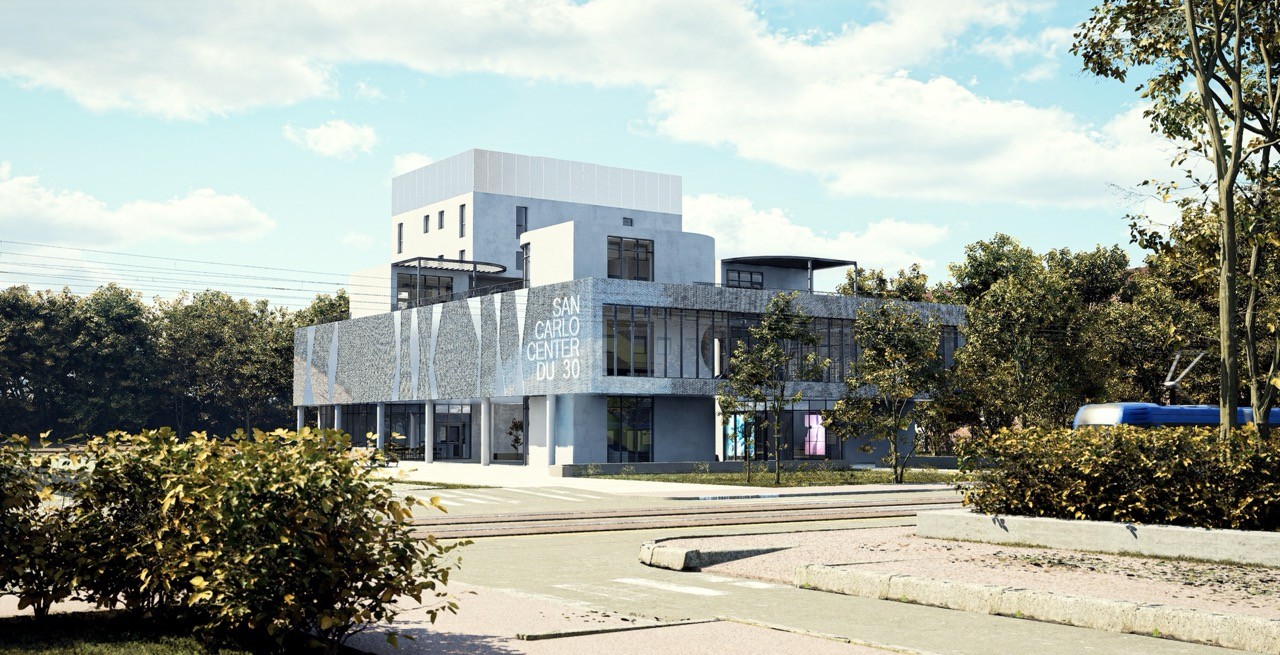
In Padua, DU30 is about to be born: a new cultural and community center that will rise in Arcella, in Piazza Azzurri d’Italia, on the site of the former Coni building. The name is not a simple acronym: it actually recalls the famous Du 30, the chair designed by Gastone Rinaldi and produced by Rima in the 1950s, right in the factory that was located near the area destined for the new building.
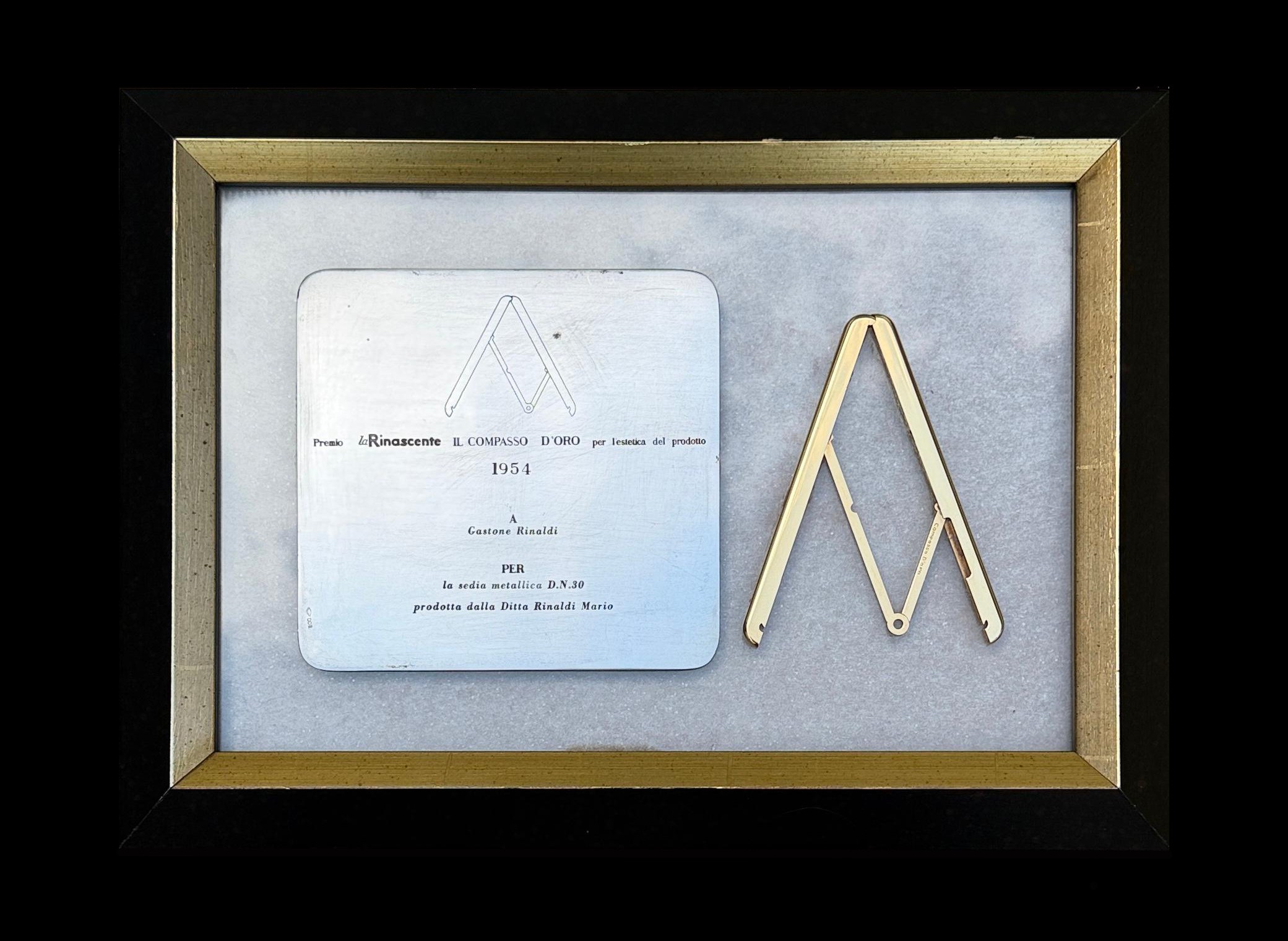
Du 30 is one of the most representative chairs of post-war Italian industrial design, and in 1954 it won the Compasso d’Oro in the first edition of the award destined to become the most prestigious recognition of Italian design. With its minimalist shapes, structural lightness, and technical innovation, it remains one of Gastone Rinaldi's most significant designs. The choice of the name DU30 restores visibility to an important part of the city's industrial and design history.
A new place for the neighborhood
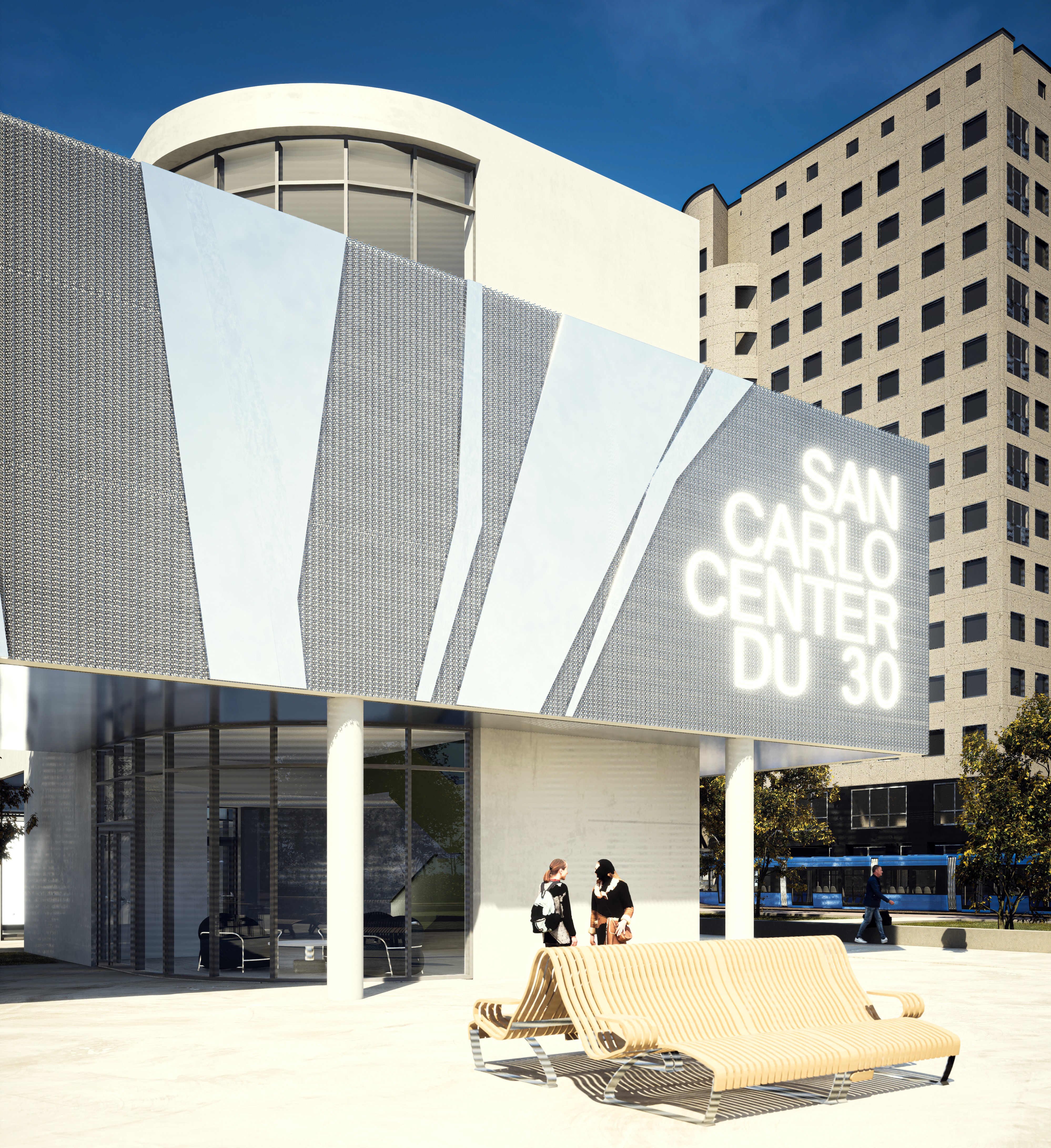
The new center has been conceived as a public space open to the city, designed to foster participation, culture, and encounters among people of different ages and backgrounds. The project includes exhibition spaces, a library with a meeting room, a terrace, areas dedicated to events, artist residencies, and social housing.
The intervention is part of the Hub Arcella 2030 program and the National Innovative Program for Housing Quality, funded through the PNRR – Next Generation EU. It is also part of the process through which Padua submitted its candidacy for Italian Capital of Contemporary Art 2028, shaping up as one of the infrastructures, both symbolic and concrete, that make credible the vision of a city capable of connecting neighborhoods, institutions, and contemporary art. After the preliminary remediation operations started in 2024, the project has entered the operational phase and is expected to be completed in the spring of 2027.
Press Review
IL GAZZETTINO, 23-07-2026 — "The DU30 at the former CONI ready for spring 2027", by Alberto Rodighiero
MATTINO DI PADOVA, 16-07-2026 — “New cafeteria at Du30, the Municipality is looking for the operator «We will soon have the call for tenders»”, by F. Pad.
artribune.com, 17-06-2026 — “Padua's candidacy for Italian Capital of Contemporary Art 2028. Great names and ambitions”, by Editorial Staff.
ilgiornaledellarte.com, 17-06-2026 — “Padua, the city of the «three withouts», runs for Italian Capital of Contemporary Art 2028”, by Cecilia Paccagnella.
MATTINO DI PADOVA, 17-06-2026 — “Contemporary Art Padua runs, led by Cattelan = Contemporary Art The return of Cattelan for Padua capital”, by Claudio Malfitano.
padovaoggi.it, 17-06-2026 — “Padua candidate for Italian Capital of Contemporary Art 2028”, by Editorial Staff.
GAZZETTINO PADOVA, 13-05-2026 — “Du 30, the windows are arriving too: square closed = At the Du30 hub here are the windows Piazza Azzurri d’Italia closed”, by Nicoletta Cozza.
MATTINO DI PADOVA, 29-04-2026 — “Site inspection at Du30 «Works near completion»”, by Editorial Staff.
MATTINO DI PADOVA, 19-04-2026 — “«A museum at the former Configliachi with paintings from the Eremitani»”, by Felice Paduano.
GAZZETTINO PADOVA, 17-06-2026 — “The places included in the project: from the Castle to the Altino, up to the Du30 and the former Configliachi”, by Lu. Prez.

Historical Context
Compasso d'Oro awarded to the Ditta Rima of Mario Rinaldi - Padua for the chair in iron, sheet metal and foam rubber, mod. DU 30 designed by Gastone Rinaldi
Motivation
The «La Rinascente Compasso d’oro 1954» Award, which was attributed to this chair of essential shape and structure, aims to reward through it the entirety of a lively and brilliant, intelligent and prompt production, of excellent execution which intervened as a coherent integrative element of taste in modern furniture in Italy. This aesthetic inspiration of an entire production belongs to that modern direction according to which the furnishing of an environment can be created, as a whole, by composing it with those typical elements in which pure stylistic values are recognizable.
The Jury
Rima S.p.A. - Padua
Founded in 1920, it has its production center in Padua. Initially, its artisanal activity was limited to the construction of iron beds. Subsequently, it oriented itself towards the mass production of tables and chairs for public establishments, replacing wood with metal. Since 1946, it has adapted its production of tables, armchairs and chairs to the modern aesthetic trend.
Gastone Rinaldi
He is the first collaborator of his father's company. He specialized in the production of sofas, chairs and armchairs. Some of his designs have been exhibited at the Milan Triennale, the Art Ménager exhibition in Paris, and the exhibition of New Forms in Italy, Switzerland and Sweden. He studied economics. He was born in 1920.
Letter
My training as a designer began in the 1950s, a period during which the typology of furniture was undergoing great evolution. The architects of those years designed new spaces, post-war reconstruction had to be fast and not very expensive financially, it was therefore necessary to build functional, smaller furniture, to exploit new materials which, produced serially, would contribute to a wide distribution.
In Padua they were too conservative, far from innovative environments; instead, in Milan there was a great fervor. Every time I felt inspired, having the opportunity to discuss ever new things with figures such as Ponti and Rosselli. With the latter, a collaboration was born to make a one-piece seat-backrest; together we made the first experiments with fiberglass and polyester resins. Thanks to my attendance in Milan, I became aware, through the architect Ponti, of a new plastic fabric: Flexa. With this material I upholstered the first series of the DU30 because I found in it excellent technical qualities and a great adaptability to the production line.
My designs have always had a single denominator: simplicity, linked to rationality and practicality together with the development of new techniques and new materials, always trying to obtain an appreciable aesthetic result; form must be an expression of substance.
In Italy we were, unfortunately, conditioned by technology and still had to proceed with artisanal means and methods while chasing imagination. An example could be the design of the DU43 chair, for the set-up of which I resorted to a normal, mass-produced fence mesh, because we did not have spot welding machines (spot welders) that could fix the light iron profiles onto each other to compose the lattice design. This is to demonstrate how design then had to "reckon" with the reality of equipment and materials. Idea and material complemented each other in the continuous search for new forms, different from the past for their functionality as well as for their aesthetics.
Gastone Rinaldi
Letter
In the 1950s, the typology of furniture was undergoing two parallel evolutions. Single pieces—chair, table, small-sized furniture designed for specific or multiple uses—followed a formal and qualitative evolution with an increasingly vast selection of materials used.
Architects of the fifties designed new spaces; post-war reconstruction had to be fast and economically inexpensive, so it was necessary to build functional, smaller furniture, and to exploit new materials that, produced serially, would contribute to a wide distribution. Therefore, the architectural evolution was transforming the traditional concept of storage furniture.
"Aesthetic taste" struggled to adapt to these new designs, and the spotlight was primarily on the younger generations, considering them as potential users.
Once the conformist diffidence of the past was overcome, these products were accepted even in heterogeneous environments, and confirmation of this is to be found in the increasingly vast distribution they enjoyed in the middle and upper social classes.
Personally, I looked at Danish and American production with admiration. A great incentive came to me from the intellectual ferment that characterized magazines such as Stile Industria and Domus, which were attentive to Italian and foreign novelties.
In Italy, we were, unfortunately, conditioned by technology and still had to proceed with artisanal means and methods, chasing imagination.
An example of this is the design of the chair DU 43; for its fabrication, I resorted to a normal wire mesh, mass-produced, because we did not have "spot" welders (spot-welding machines) that could fix the lightweight iron sections one on top of the other to compose the grid design. This is to demonstrate how design then had to "reckon" with the reality of equipment and materials.
Idea and matter complemented each other in the continuous search for new forms, different from the past due to their functionality as well as their aesthetics.
GASTONE RINALDI
Article
Anyone who has followed Rima’s activity in recent years has been able to see with what enthusiasm, at times even too exuberant for the purposes of more in-depth research, it sought to orient its production towards the criteria of Industrial Design. Perhaps among the first in Italy, at the ninth Triennale, Rima proposed the combination of new materials, such as foam rubber and plastic fabrics, with iron and aluminum sheets, whose use as a support for the padding of chairs and armchairs had not been considered. The search for materials that offered the possibility of a faster execution of the products that Rima dedicated itself to was inherent in the need to start production on a 'serial' scale. At that time, still lacking equipment capable of carrying out the multiple processes to complement the basic ones in iron and wood (phosphatizing, painting, polishing, nickel-plating, chrome-plating, oxidizing, plastic molding, upholstery, straw-weaving), they tried to set up a few types of chairs, armchairs, and small armchairs with new materials resulting from the rebirth efforts of the major industrial complexes, capable of satisfying the use for which they were intended.
Production was then organized according to the criteria of group manufacturing, headed by a worker trained in a new kind of production and capable of acting as a useful connection between the designer and the executor. An important task for the producer who had undergone the technical evolution of the time was to promote the technical and moral education of the workforce to bring them closer to the spirit of the designer. Specialization by group was necessary and was the only approach that offered hope for a faster recovery in production. However, the solution brought with it the more general problem of technical reorganization. Once the years of urgent demand were over, the need arose to review and reorganize the production system itself.
The managers of Rima oriented themselves towards the autonomy of all the processing steps necessary to complete the product, freeing themselves from any craft contributions that had often proved to be anachronistic and insufficient within a production program.
With the recent expansion of the factories in Padua, Rima has taken another step towards that restructuring of facilities and that review of equipment for a more rational adjustment, which is considered essential to achieve a well-executed standard production on an industrial level.
Rima can therefore be considered an industry in full evolution, in search of a complete technical-productive balance that alone can define the quality and the strengths of a modern industry. Design intervenes in this process as one of the most important elements of action, but it is certainly not the only or decisive one.
The furniture industry sector in Italy has too often entrusted all its energy to invention and formal novelty in search of success. A stricter production research and a more secure technical orientation provide those bases that alone allow good design to find a way of expression. Certainly, Rima will not lack the energy in the future to proceed along this path, joining that group of Italian industries entrusted with the task of qualifying furniture production in Italy.
Article
1958, the year of Saturn.
Enrolled in my first year of architecture, I remember my first "encounter" with Gastone Rinaldi.
Domus, Casabella, still almost all in black and white, the charm of the greats, of the masters.
Giancarlo De Carlo invited Vico Magistretti to the faculty: one of those extraordinary, shoulder-to-shoulder seminars that could be done with fewer than a hundred students.
The Carimate chair, Vico Magistretti in white socks, and us devouring Domus, Casabella, Architettura.
And there was Gastone. He had already won a Compasso d'Oro: a legend.
Young, athletic, and talented. One of those figures on whom many of us built the hopes of our work, one of those figures to follow and pursue, unattainable, with the monkey-like curiosity that has always been the finest quality of our profession.
Then, many years later, a very social meeting, very much about saying and not saying, friends around, a bit of confusion, the unsaid, probably, more important than what was said. And discovering that the master, as often happens, is a person of enormous serenity, strength, sweetness, and simplicity.
Saturn, by now, is fading into the past, but it remains a pillar, a turning point, a work so clear and precise, so marked by the absence of time and dating, that it still accompanies us along the path, now set, of being designers.
Perhaps it is also Gastone's fault (or merit?) if I continue to do this job today.
Many years later, almost by chance, both of us held back by a reluctance to ask and a hesitation to offer, we found ourselves collaborating.
We even did some four-handed work on the same sheet of paper, and Gastone's serenity, like a long wave, overwhelmed my then somewhat frantic nature.
Today, Gastone Rinaldi is, rightfully, being presented to the public in an exhibition that the PMT and the Salone del Mobile Triveneto are proud to have conceived. An exhibition displayed with clarity and lucidity by Enzo Berti, which has left Rinaldi's works with plenty of room to breathe.
A small and precious, intimate and enlightening exhibition that succinctly tells us the story of a lazy student, a professional footballer, and a racing driver with a passion for design, research, and experimentation.
Of a pencil craftsman who managed to enter, with the elegance that is his merit, without pushing, with the charisma born of seriousness and professionalism, into the difficult and articulate world of design, marking, in an era of pioneers, his path of unforgettable milestones, placing himself, perhaps in spite of himself, gruffly, in the role of master for many of us, designers of the second generation of "younger brothers".
Saturn, since 1958, remains like an archetype, a timeless shape, the "always seen and never seen" that is characteristic of the Chinese vase or the Etruscan bowl.
Saturn, for those who do not remember, is a sofa.
Article
Gastone Rinaldi's career began in the post-war years and extended into the 1990s. Over the course of about half a century, the designer designed tables, coffee tables, bookcases, but mainly chairs, of all types: folding, stacking, rocking, deckchairs, armchairs, easy chairs, sofas.
Rinaldi began designing for Rima, the family company, which specialized in furniture and beds for hospitals and offices. He preferred iron rod, sheet metal, and tubing, and was inspired by the new trends in the minimal interior design taste of the time: a world defined by the lightness of Alexander Calder and the sculptures of Henry Moore, which on one hand aimed for an aesthetic purpose, and on the other took functionality into account, through the proposal of movable, stackable, and folding chairs.
As for materials, the architect and designer, who was often in contact with Domus and its director at the time, Gio Ponti, did not stray from iron, which the company used for its industrial furniture. Indeed, he adapted and even defined his modernity through a more elaborate use of that material, using lacquered iron rod, chrome-plated iron tubing with new techniques, steel profiles, die-cast metal, and sheet metal. He also used foam rubber upholstery, curved plywood, and plastic molds.
His designs may recall those of Charles & Ray Eames and Harry Bertoia, but they are distinguished by a greater attention to the artistic aspect, with a nuance that is sometimes almost self-deprecating and inclined to lightness. As his daughter, architect Stefania Rinaldi, explains, "my father maintained a close link with the artisanal tradition: he knew how to do small welding, the bending of tubes, and he always discussed technical problems with the workers. Sometimes he preceded the drawing on paper with models built with pipe cleaners used for cleaning pipes".
His way of designing was flexible and could adapt to the needs and taste of the client: the same chair could have four wooden legs or a swivel base.
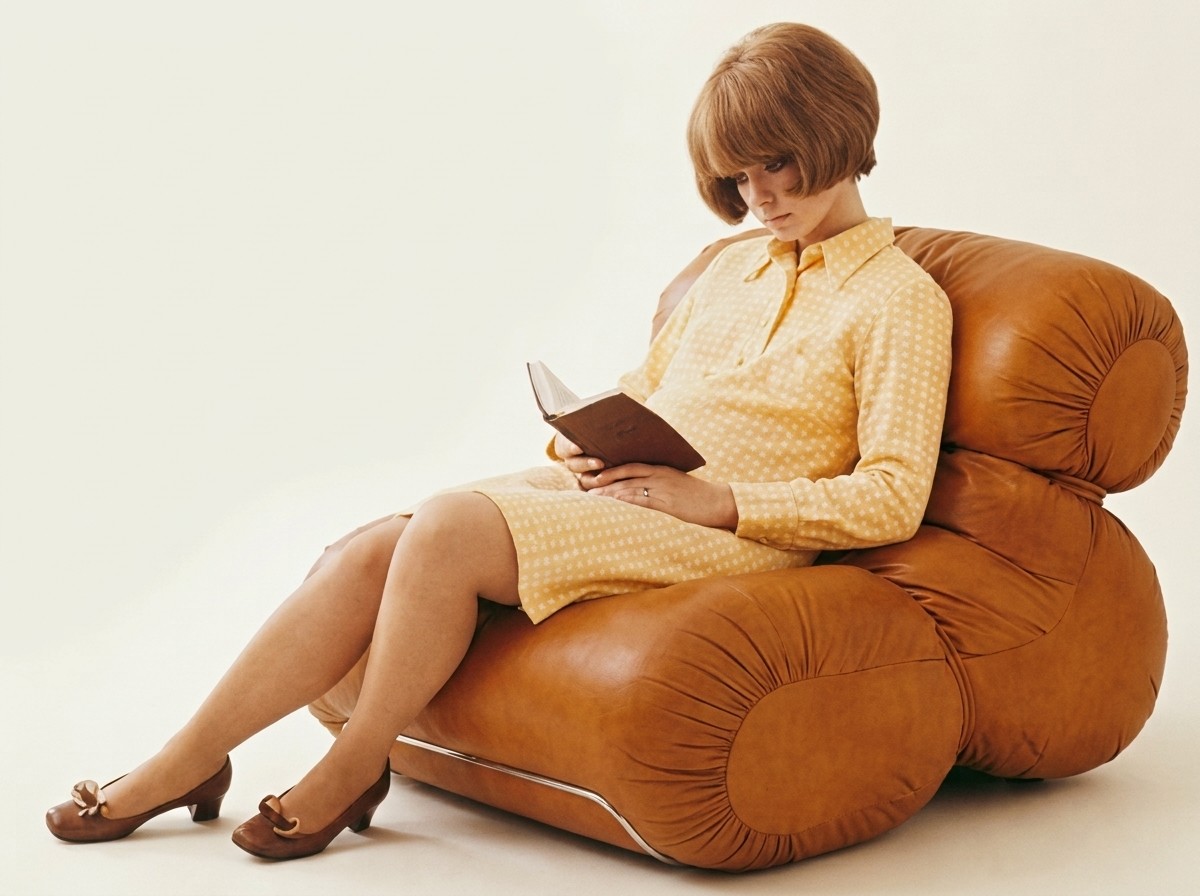
Starting from an elegant and witty Italian style, in rod and tube, the 1950s and '60s brought more geometric shapes. The Saturno sofa represents an example of this new trend.
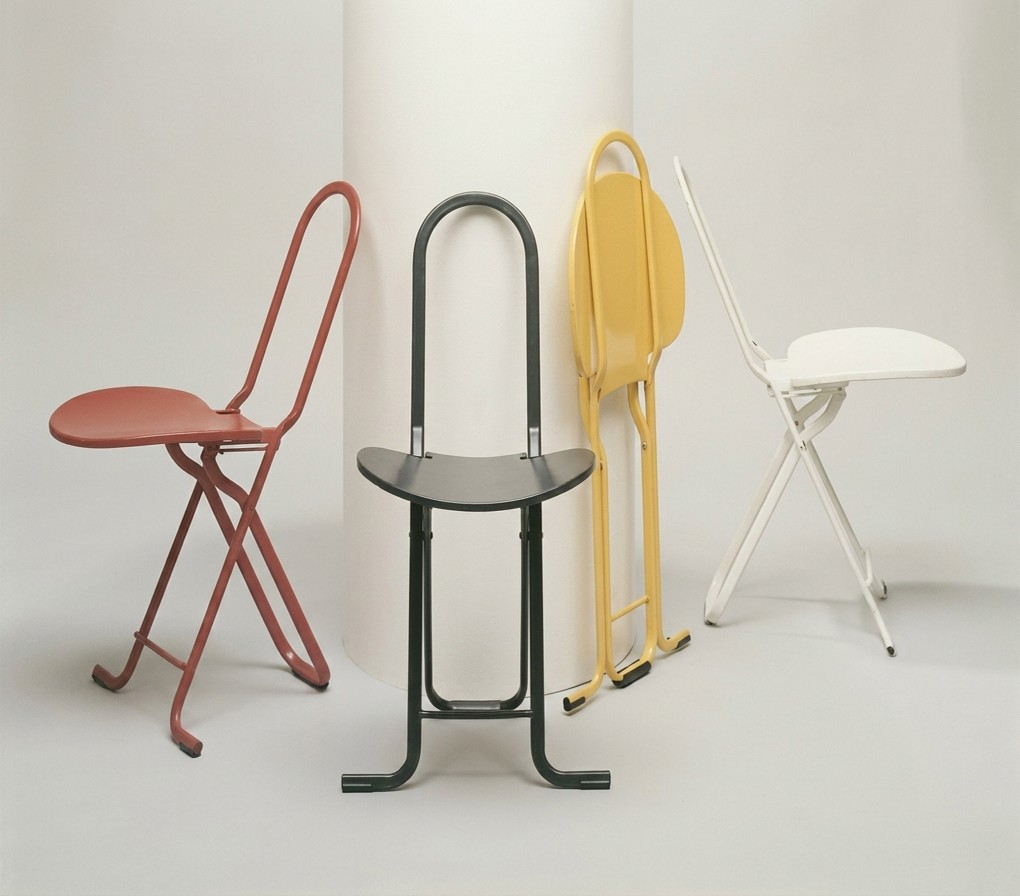
In the 1960s and '70s, Rinaldi's design was more pop and futuristic, in the style of 2001: A Space Odyssey; to get an idea, one only has to look at the Zeta stackable armchair or the Sabrina chair. In 1974, Rinaldi left Rima, the family company, to found his own company, Thema. Even in those years of austerity, Rinaldi always kept a step ahead with the Aurora stackable armchair and the unforgettable Dafne folding chair. The observation and reflection on current reality always remained his source of inspiration for ever-new designs.
As his wife, Letizia Rinaldi, recalls, "the Dafne chair and its mechanism were born from an experience lived on board an Aeroflot plane heading to Leningrad in the late 1970s: on that occasion Gastone noticed how poorly the reclining seat tray opened and how it could be perfected and adapted to the mechanism of a chair."
Rinaldi's seats are practical and in touch with the spirit of modernity without ever being heavy: there is always a witty touch that lightens even the design.
In his career, Rinaldi received various recognitions: among these, a Compasso d'Oro for the DU30 in 1954 and mentions for the DU43 in 1954, for the Aurora in 1978, and for the Dafne in 1981.
WHO'S WHO.
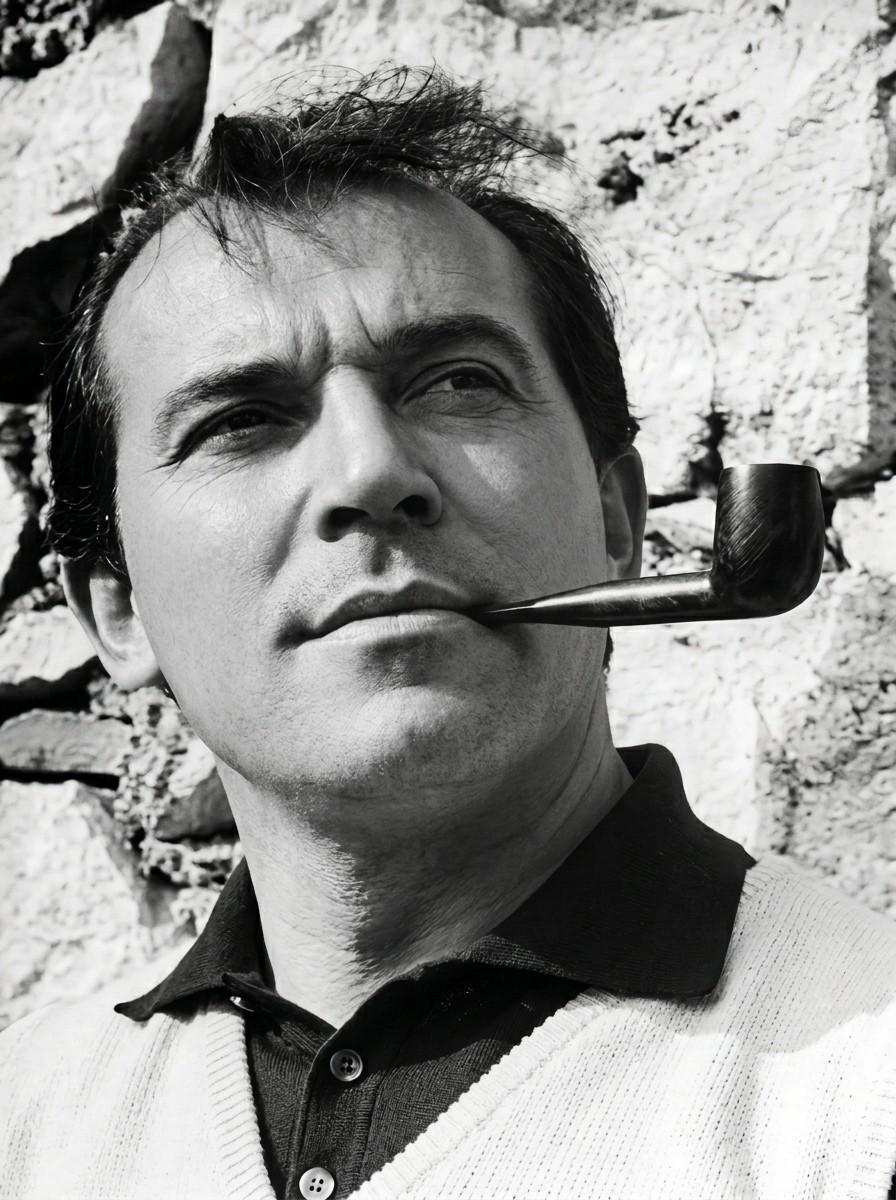
Gastone Rinaldi (Padua, 1920 - 2006), a pioneer of Italian design, designed chairs of all kinds from the late 1940s to the 1990s, first for the family company Rima and, from 1974, for Thema. Today, his chairs are highly sought after and rare. The DU 30 chair, with which Rinaldi won the Compasso d'Oro in 1954, was sold by the Munich auction house Quittenbaum for 1,800 euros, while the Chicago auction house Wright sold the Saturno sofa for 5,000 euros.
Historical-design analysis
Technique, form, and context in the 1950s
Jacopo Drago
,
2014
At a time when design was forced to reckon with the criteria of industrial production, the fact of being a partner in his father's company placed Gastone Rinaldi in direct contact with the reality of the factory and with the work of the laborers: a privileged condition that not all designers were able to benefit from.
It is precisely from this close relationship that Rima products were born: the outcomes of a synthesis between different skills, aspirations, and objectives—specifically, the creative ones of the designer and the practical ones of the worker. A continuous dialogue between design and technique was thus established. The designer confronted feasibility along with productive and economic possibilities, while the workers approached the formal and functional reasons behind the project, contributing with more suitable solutions. This exchange gave rise to a collaboration capable of generating a balance between the technical and aesthetic dimensions.
Attention to production constraints did not limit the project, but instead became a source of inspiration, leading to the definition of new objects, as in the case of the Du 43 (1953) and Du 42 (1954) chairs.
These two models interpret some famous foreign seats, such as the Wire Chair by Charles and Ray Eames and the Diamond Chair by Harry Bertoia. They fit into a design lineage that establishes formal parallels with international production but stands out for a careful and conscious reworking. Some chairs by De Carlo, Viganò, and De Carli produced during those same years also belong to this same trend.
Rinaldi was undoubtedly influenced by Eames and Bertoia, whose chairs were revolutionary from both an aesthetic and material point of view: resistant yet light and transparent metal structures, obtained through wires modeled on a shell to achieve an almost sculptural quality. The use of metal wire was not entirely new — consider the Lounge Chair by Sol Bloom (1950) or the Butterfly Chair (1938) — but the developments introduced by Eames and Bertoia led to completely innovative design outcomes.
The metal wire, cheap, light, and resistant, lent itself to efficient industrial production, allowing these chairs to spread rapidly in the United States and abroad, thanks also to their low cost. It is therefore not surprising that they aroused such enthusiasm: English architects Alison and Peter Smithson defined them as "a message of hope from another planet".
The influence, however, was part of an autonomous and conscious design process. The Du 43 and Du 42 were not simple derivations, but original results that reinterpreted international suggestions in light of the Italian productive and cultural context. Rinaldi assimilated the research of Eames and Bertoia and translated it into his own solutions, developed starting from different technical and industrial conditions. The results were chairs deeply rooted in Italian reality, both in terms of language and construction process.
As Rinaldi recounted in a 2002 interview:
“I was influenced by Eames and the great designers, even though we did not have all the technical possibilities in Italy that America had at that time; Bertoia's chair was made with a metal mesh of wire rods welded one by one with a spot welder, equipment we did not have yet. I used a fence mesh for a chair instead. Just as I did with the Du 30, I had to bend the sheet metal because we didn't have shells yet, so the sheet metal was conceived precisely as a sheet that folds, and underneath it creates a rib that stiffens the seat, and then to give greater solidity, the four legs are fixed on the centerline of the fold.”
The differences between the American chairs and those of Rinaldi reflect wider economic and industrial divergences between the United States and Italy. In the 1950s, Italian industry — concentrated mainly in the North — was still in a phase of recovery, marked by the consequences of the war, while the American industry enjoyed a significant advantage.
The history of Rima itself exemplifies this situation. The plants, located in the industrial area of Via Paolo Sarpi in Padua, suffered severe damage during the bombings of December 16, 1943, when the US Air Force hit the railway station and surrounding areas. Production was subsequently transferred to new peripheral facilities, but even there, activity was interrupted by military occupation, which forced a reconversion of production.
Only towards the end of the 1950s did the company manage to fully recover, expanding and modernizing its factories and definitively abandoning the artisanal approach. In this context, the S 46 chair (1959) was born, made with the spot resistance welding techniques already widespread in the United States. Unlike its predecessors, constructed with woven wire mesh, this new seat utilized metal wires welded at the points of intersection, marking a significant technological advancement.

Historical-design analysis
Industrial design and work culture in the Pirelli Tower
Jacopo Drago
,
2014
Relations between Rima and the Ponti Fornaroli Rosselli studio had already been established for some time. The first documented collaboration between Gio Ponti and Gastone Rinaldi dates back to 1950, with the creation of the Du 10 chair. In the following years, collaborations intensified, giving rise to an articulated series of chairs, tables, and bookcases. Towards the mid-1950s, Rima, together with Ponti and Rosselli, created a furniture collection that, alongside products by Artflex, Parma, and Knoll International, contributed to the furnishing of the Pirelli Tower. The USC 645 desk fits into this context.
To fully understand the significance of this project, it is necessary to consider the historical framework in which it took shape. The decade following the Second World War represents a crucial moment for Italian design, which configured itself as an expression of the aspirations of a country engaged in reconstruction and the industrialization process. Faced with the profound material and moral destruction left by the conflict, the culture of design felt the urgency to contribute actively to a comprehensive refoundation.
Despite the diversity of ideological positions, some recurring themes emerged: the humanization of objects and spaces, the search for new expressive languages, the dialogue with tradition as a basis for innovation, interest in modern materials, and, above all, the belief that design could play an active role in shaping the social and cultural context. These principles also inform the design of the USC 645 desk and, more generally, the intervention for the Pirelli Tower.
The development of postwar Italian design unfolded along two main directions. On one hand, it was understood as a concrete expression of democratic ideals and a tool for cultural rebirth in post-fascist Italy; on the other hand, it became a terrain for formal experimentation, even in opposition to rigid functionalism. Both of these trends found space in the pages of "Domus" magazine, although in the specific case of the Pirelli Tower a stronger adherence to the first approach is evident.
Ernesto N. Rogers, director of "Domus" between 1946 and 1948, emphasized the need to build not only a technique but also a shared taste and morality, identifying the project as a tool to build a new society. This approach, interwoven with the legacy of pre-war rationalism, expanded the field of architecture and design to include a broader cultural and human dimension.
With Gio Ponti's return to the directorship of "Domus" in 1948, this tension translated into an increasingly intense search for a style capable of expressing a "beautiful life," in which aesthetic quality, ways of living, and production processes were closely interconnected. The idea of art allied with industry became a central theme, while the recovery of tradition, combined with the growth of the industrial apparatus and the introduction of new materials, pushed Italian design towards an increasingly conscious and structured dimension.
These values find full expression in the design of the Pirelli Skyscraper, conceived as a symbol of Milan's rebirth. The complex represents a synthesis between cultural aspirations, technical innovation, and industrial organization. In this context, architecture and design mutually influenced each other: research on the building—in terms of prefabrication, industrialization, and rationalization of the construction site—was also reflected in the design of the furniture, contributing to the definition of new aesthetic and methodological parameters.
Issue 379 of "Domus" (June 1961), dedicated to the Pirelli Tower, underlines the consistency between the building's exterior and its interiors, highlighting how the search for essentiality and unity extended to the design of the furniture. The latter were identical for all users, from managers to clerks, expressing a principle of both formal and symbolic equality.
In the same issue, Rima's contribution to the development of the desk was recognized, described as a central element in defining the identity of the interior spaces. Its uniform presence in the environments—from executive offices to operational spaces—contributed to building a coherent language, based on a "technical elegance" devoid of artifice and on a principle of sobriety that also translated into ethical value.
Indicative is also the way Rima itself described its approach in the catalog of the early 1960s. The office was conceived as a space where environmental well-being directly affected the quality of work. Excessively complex or formally gratuitous solutions were rejected, favoring instead functionality, balance, and clarity. The goal was to offer every user—manager or clerk—optimal conditions, both operational and representative.
From a technical point of view, the USC 645 desk stands out for its advanced construction consistent with these principles. It features a pressed metal "skid" base and represents the evolution of a previous model (USC 636), characterized by die-cast aluminum bases. The structure is made of chrome-plated or nickel-plated steel tubing, with adjustable feet; the painted sheet metal drawer units are equipped with centralized locking systems, while the top is in plastic laminate with stainless alloy edging.
The most innovative aspect, however, lies in the modular concept of the system. More than a single piece of furniture, the USC 645 is part of a configurable set, designed to adapt to different operational needs. The base module is available in three sizes and can be integrated with drawer units and filing cabinets that can be freely positioned. Accessory elements, such as typing tables, can be connected to create more complex configurations, such as "L-shaped" desks.
This approach allowed for the transfer of a flexibility typical of artisanal production onto an industrial scale, while maintaining high standards of quality and formal consistency. The system, codified through a precise scheme of abbreviations, represents an advanced example of integrated design for the working environment.

Interview
ARCHITETTI PADOVA – Periodical of the Order of Engineers, Architects, Planners, Landscapers and Conservationists of the Prov. of PD
,
n° 18, Gen 2005
What is design today?
Is it still the epic industrial design of the 1950s where technology managed to formalize not only a function but also an idea of progress and modernity?
Or is it rather just the final stage of an economic process that imposes an attractive image on every commercial product defined by market research and statistical surveys?
Is there a local tradition of design?
And what are, and of what kind, the boundaries of this potential tradition?
In a time where space is always perceived indirectly and mediated, hasn't the short-circuiting of images and products homogenized all diversity, making physical, political, and cultural borders coincide with the undefined virtuality of the web?
What is the typical field of design?
Furniture, lamps, and home accessories, or also everything that covers and decorates our lives?
Is the joint of a steel leg with the wooden seat of a chair really so different from the clasp of a gold mesh necklace?
To these, and to many other questions that may arise while flipping through the pages of the magazine, it is not possible to give a unique answer; our attempt to take stock of the state of design in a local reality like that of Padua offers a series of different, divergent, perhaps contradictory, but nevertheless unambiguous indications, at least in regarding the quality of research, outcomes, and products.
Having overcome the period of the historical or radical avant-garde, we now find a versatile research that tackles design opportunities with liveliness and optimism, attributing the same value to a wooden reading stand, a steel chair, a marble ornament, or a canvas and leather handbag.
We are therefore not so far from the way of thinking, designing, and making that Gastone Rinaldi reminds us of: a craft tradition, especially in carpentry, far from the logic of mass production, which peacefully coexists with contemporary formal research without inferiority complexes or provincial limitations, but with a gaze directed straight towards the future, perhaps seen through a Japanese gull-wing camera designed in Corso Milano.
Nicola Bergamin
...Let's start from the beginning: how did a young designer in the early 1950s go from Padua to Milan?
Every two weeks I went to Milan, because with Rima we had a lot of work in Milan, and then I was introduced to the architect Ponti by the Paduan artist Paolo De Poli.
[omitted]
Those visits to Milan and meetings with those people managed to give me a boost and an enthusiasm that I then poured into my work here in Padua.
...Was it Ponti who acted as a bridge to the American experiences of the '40s-'50s, the Eames, Bertoia, Saarinen...?
No, I already knew them through architecture and design magazines. I subscribed to Domus and Interni, which had published what was being done in the United States in the late 1940s.
I was influenced by Eames and the great designers, even though we in Italy did not have all the technical possibilities that America had back then; Bertoia's chair was made with a metal mesh of wire rods welded one by one with a spot welder, equipment we didn't have yet. So, for a chair, I used a garden fence wire mesh (the DU43).
Just like when I made the DU30, I had to bend the sheet metal because back then we didn't have shells yet, so the sheet metal was conceived exactly like a sheet that bends, and underneath it forms a rib that stiffens the seat. Then, to provide greater solidity, the four legs are fixed on the centerline of the fold.
…And what was your relationship with Ponti like?
Ponti was a taciturn and very sweet man, a person open to everyone with whom you could talk calmly and peacefully. He gave his judgments without malice. He was always very kind to me. Seeing my drawings, he said "...just look at these Venetians...", and encouraged me to keep going.
It is pleasing to find people of that level and fame who give you such encouragement, especially for someone modest like me who went there to present my catalog and see if they needed 5 rather than 8 chairs.
The Piccolo Teatro I mentioned earlier came later and, as the name says, it was indeed small.
…In the 1950s there was a very close, almost osmotic, connection between design and production, between project and technology. How has this relationship changed since then?
I lived the reality of the enterprise, first with Rima, my father's company, then with Thema.
Rima grew to have 120 workers; so it was a real industrial factory and not a craft business as some say. We had many sectors, not just domestic furniture, but also for hospitals, offices, entertainment venues; we had a vast product catalog.
I was integrated into the family business, and I carried forward the research on the metal chair. My design studio was in the factory, to have direct contact with production, to be able to experiment directly with the solutions and ideas that came off the drawing board or from the scale models I made.
Now it is really difficult to design. When I started, there was much more space for those who wanted to do new things; much was still to be invented, and there was also time to apply oneself.
Today, in the things I see published, it seems to me that real industrial design is missing; novelty and even technical innovation compared to what was done before are lacking. Even though competition among manufacturers has been stimulated more, the quality of the product does not seem exciting to me.
Very little attention is paid to young designers and their ideas; the industry either exploits them or remains indifferent, interested almost exclusively in commercial policies that only guarantee turnover.
A good chair cannot cost too much, even when it is well made.
What are the qualities of a good designer?
To be a designer, even for me who am not an architect despite always having that calling, you need the passion to create something that has not been done before, but starting from what has been done, because you always need a beginning; you must think of something to project yourself forward.
A designer must then have ideas for anything; for me, almost as a pastime, it happened that I designed and made some prototypes for the house, an oil cruet, a carafe, some containers, in both glass and ceramics.
Two small anecdotes can perhaps better explain what I mean when I talk about "starting from what has been done" and "ideas for anything."
When skiing right after the war, there was no slope where you didn't have to stop two or three times to tie the laces that secured the boots to the skis; at that time I had a 3rd series Lancia Appia, which had the spare wheel strapped in the back with a military-origin strap, but the buckle was not much different from the buckles we see today on modern ski boots. The idea of translating mechanisms or specific technical solutions of industrial origin to other sectors is particularly interesting, even though in that case, despite having made all the working drawings, it went no further. Similarly, the design for a toothpaste stick with a wide base cap remained on paper, so that the tube could stand upright without needing a cup, and the cap would not fall into the sink drain.
...And what qualities must a good design have?
An industrial design product must combine: technological innovation, ease of manufacture, cost-effectiveness, safety, durability, practicality, in addition to aesthetic qualities; everything must coexist.
In 1979 I designed Dafne, a small folding chair, which has been copied a lot and which, among other things, continues to sell well. When closed, it is 5.5 cm thick, can be hung on the wall, and the comfort of the seat sacrifices nothing to durability.
The chair I am sitting on right now, for example, has a die-cast under-seat part; when this was made, this technique was almost an absolute novelty for Italy. This too traced back to American production, which already had this type of casting back then; in this sense, I was talking about innovation.
...What is your way of working?
The work started from drawing. Besides, the need to constantly renew the catalog forced me to produce new ideas and creations every year, but it then had to be executed by the worker, in a relationship of mutual esteem and respect that went through the concreteness of technical solutions and respect for those who crafted those solutions.
It was necessary, always experimenting, to try and try again, adjusting the ideas in the field. The collaboration was such that it led us to intervene even on manufacturing techniques and equipment when the result was not satisfactory. The drawing gives you the scale, but the experience of making gives you almost immediately the feasibility of your design.
A constant practice in my work was filing the design: I made the drawing, registered the model, and only then did production take place. The model was always registered, and not infrequently so was an invention patent.
I worked until 1991, after which Thema closed. Now I only work for fun, but I still miss the direct relationship with production, and the computer, which I do not know anyway, does not seem to me to be able to substitute for the workshop.
Padua, July 30, 2002
edited by J. Adda, N. Bergamin and M. Grassi
Selected bibliography
MONOGRAPHS
DRAGO, G., DRAGO, J., Gastone Rinaldi designer at RIMA, Capitolium Art, Brescia, 2015.
ROMANELLI, M., LAUDANI, M. (eds.), Design: Nordest, Abitare Segesta, Milan, 1996.
BOSONI, G., Original Patents of Italian Design: 1946-1965, Electa, Milan, 2000.
CATALOGUES
ARTICLES / ESSAYS / MAGAZINES
FRATEILI, E., The Essential Qualities of Furniture, in “La Casa”, n. 2, 1956.
PONTI, G., The Pirelli Tower, in “Domus”, no. 379, June 1961.