Musical chairs
David Chester Park on AD Magazine
–
2012
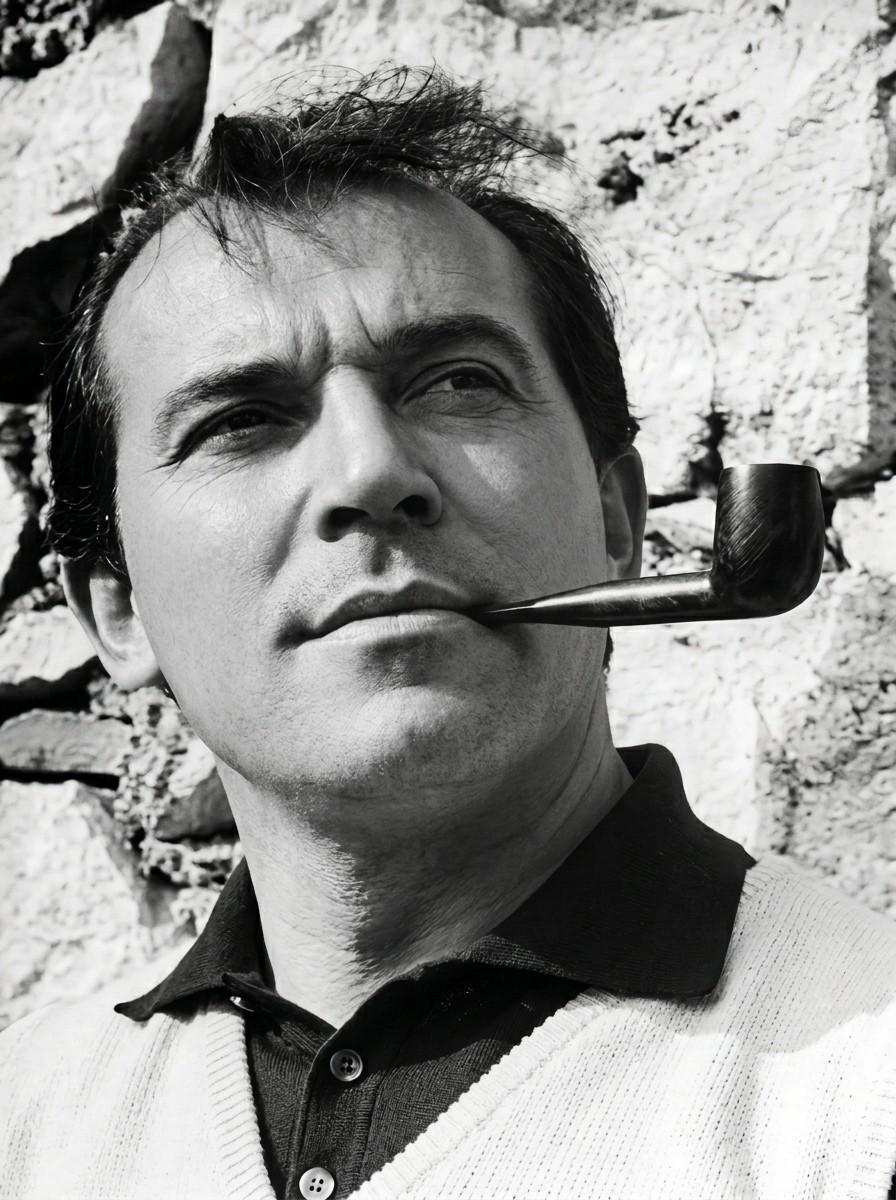
Gastone Rinaldi's career began in the post-war years and extended into the 1990s. Over the course of about half a century, the designer designed tables, coffee tables, bookcases, but mainly chairs, of all types: folding, stacking, rocking, deckchairs, armchairs, easy chairs, sofas.
Rinaldi began designing for Rima, the family company, which specialized in furniture and beds for hospitals and offices. He preferred iron rod, sheet metal, and tubing, and was inspired by the new trends in the minimal interior design taste of the time: a world defined by the lightness of Alexander Calder and the sculptures of Henry Moore, which on one hand aimed for an aesthetic purpose, and on the other took functionality into account, through the proposal of movable, stackable, and folding chairs.
As for materials, the architect and designer, who was often in contact with Domus and its director at the time, Gio Ponti, did not stray from iron, which the company used for its industrial furniture. Indeed, he adapted and even defined his modernity through a more elaborate use of that material, using lacquered iron rod, chrome-plated iron tubing with new techniques, steel profiles, die-cast metal, and sheet metal. He also used foam rubber upholstery, curved plywood, and plastic molds.
His designs may recall those of Charles & Ray Eames and Harry Bertoia, but they are distinguished by a greater attention to the artistic aspect, with a nuance that is sometimes almost self-deprecating and inclined to lightness. As his daughter, architect Stefania Rinaldi, explains, "my father maintained a close link with the artisanal tradition: he knew how to do small welding, the bending of tubes, and he always discussed technical problems with the workers. Sometimes he preceded the drawing on paper with models built with pipe cleaners used for cleaning pipes".
His way of designing was flexible and could adapt to the needs and taste of the client: the same chair could have four wooden legs or a swivel base.
Starting from an elegant and witty Italian style, in rod and tube, the 1950s and '60s brought more geometric shapes. The Saturno sofa represents an example of this new trend.
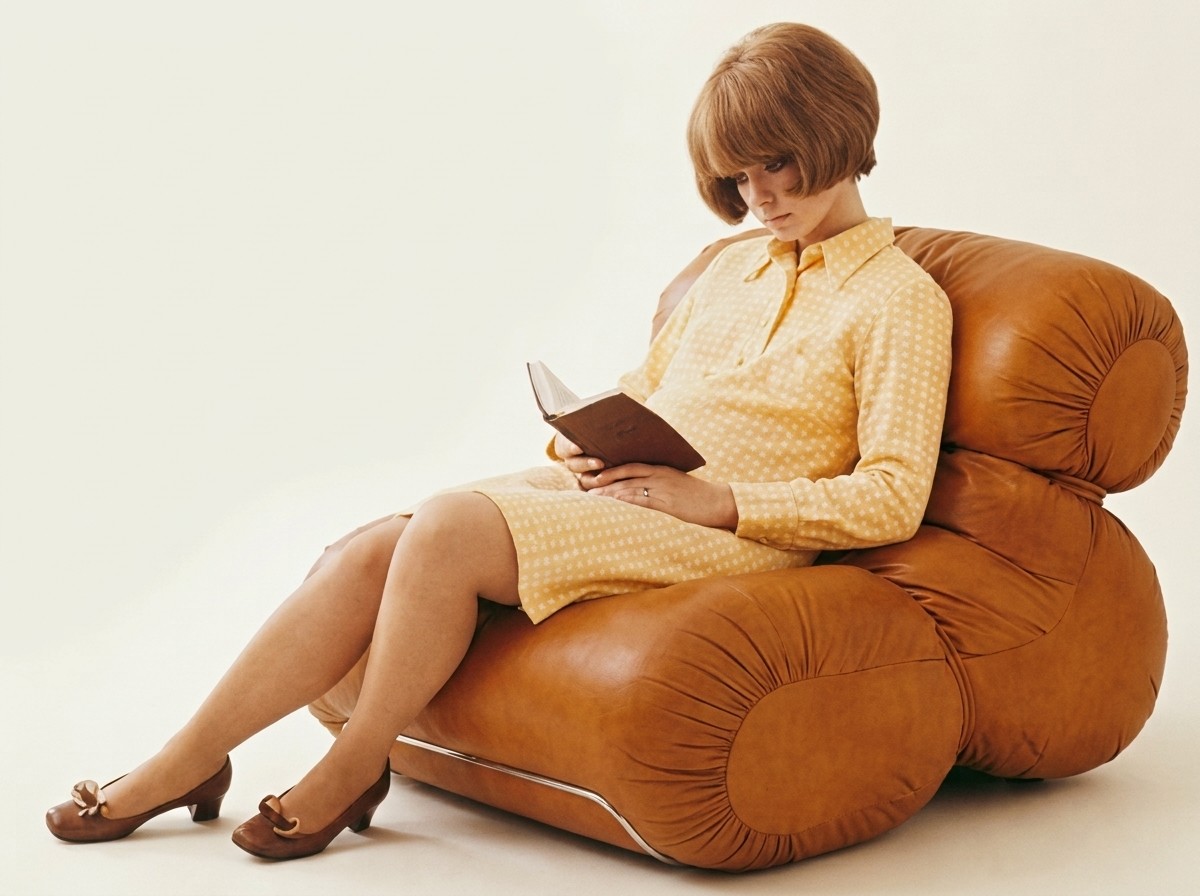
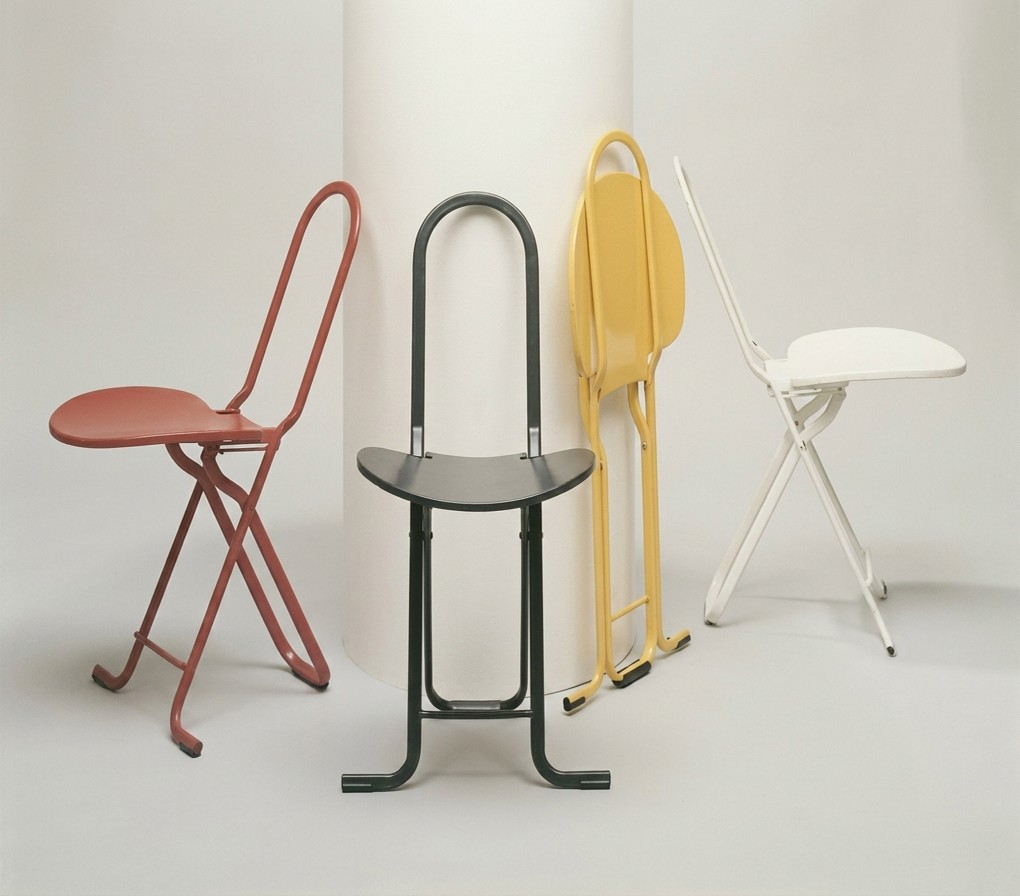
In the 1960s and '70s, Rinaldi's design was more pop and futuristic, in the style of 2001: A Space Odyssey; to get an idea, one only has to look at the Zeta stackable armchair or the Sabrina chair. In 1974, Rinaldi left Rima, the family company, to found his own company, Thema. Even in those years of austerity, Rinaldi always kept a step ahead with the Aurora stackable armchair and the unforgettable Dafne folding chair. The observation and reflection on current reality always remained his source of inspiration for ever-new designs.
As his wife, Letizia Rinaldi, recalls, "the Dafne chair and its mechanism were born from an experience lived on board an Aeroflot plane heading to Leningrad in the late 1970s: on that occasion Gastone noticed how poorly the reclining seat tray opened and how it could be perfected and adapted to the mechanism of a chair."
Rinaldi's seats are practical and in touch with the spirit of modernity without ever being heavy: there is always a witty touch that lightens even the design.
In his career, Rinaldi received various recognitions: among these, a Compasso d'Oro for the DU30 in 1954 and mentions for the DU43 in 1954, for the Aurora in 1978, and for the Dafne in 1981.
WHO'S WHO.
Gastone Rinaldi (Padua, 1920 - 2006), a pioneer of Italian design, designed chairs of all kinds from the late 1940s to the 1990s, first for the family company Rima and, from 1974, for Thema. Today, his chairs are highly sought after and rare. The DU 30 chair, with which Rinaldi won the Compasso d'Oro in 1954, was sold by the Munich auction house Quittenbaum for 1,800 euros, while the Chicago auction house Wright sold the Saturno sofa for 5,000 euros.