Zeta
Design: Gastone Rinaldi

Info
Year:
1970
Production:
Rima
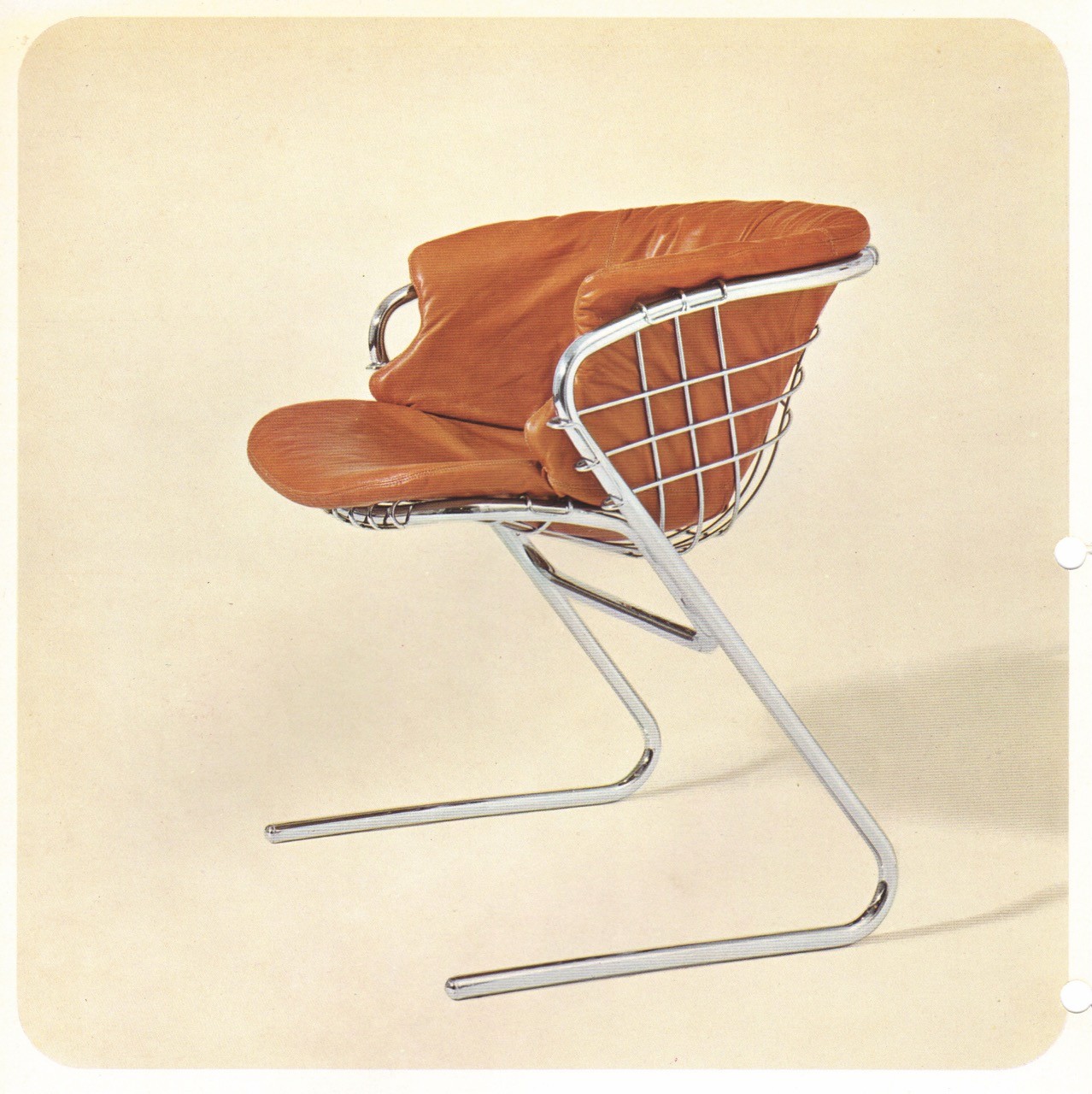
Designed around 1970 for Rima, the Zeta armchair represents one of the most mature results of Gastone Rinaldi's research into the cantilever seat and the structural elasticity of metal.
Technical and Formal Profile
The model is characterized by a tubular metal frame with outstanding elastic potential. The load-bearing structure develops from the "sled" base into two side uprights that rise to meet and support the shell. In this phase, Rinaldi returns to investigate the theme of the "suspended" seat-backrest, a primitive intuition of his (B203, 1948) from the late 1940s which finds a refined formal synthesis in the Zeta.
Innovation and Materials
The distinctive element is the independent shell made of electrowelded steel rod mesh. This technical solution allows the seat to flex and respond naturally to the user's movements and posture, offering dynamic comfort that exploits the intrinsic flexibility of the tubular metal.
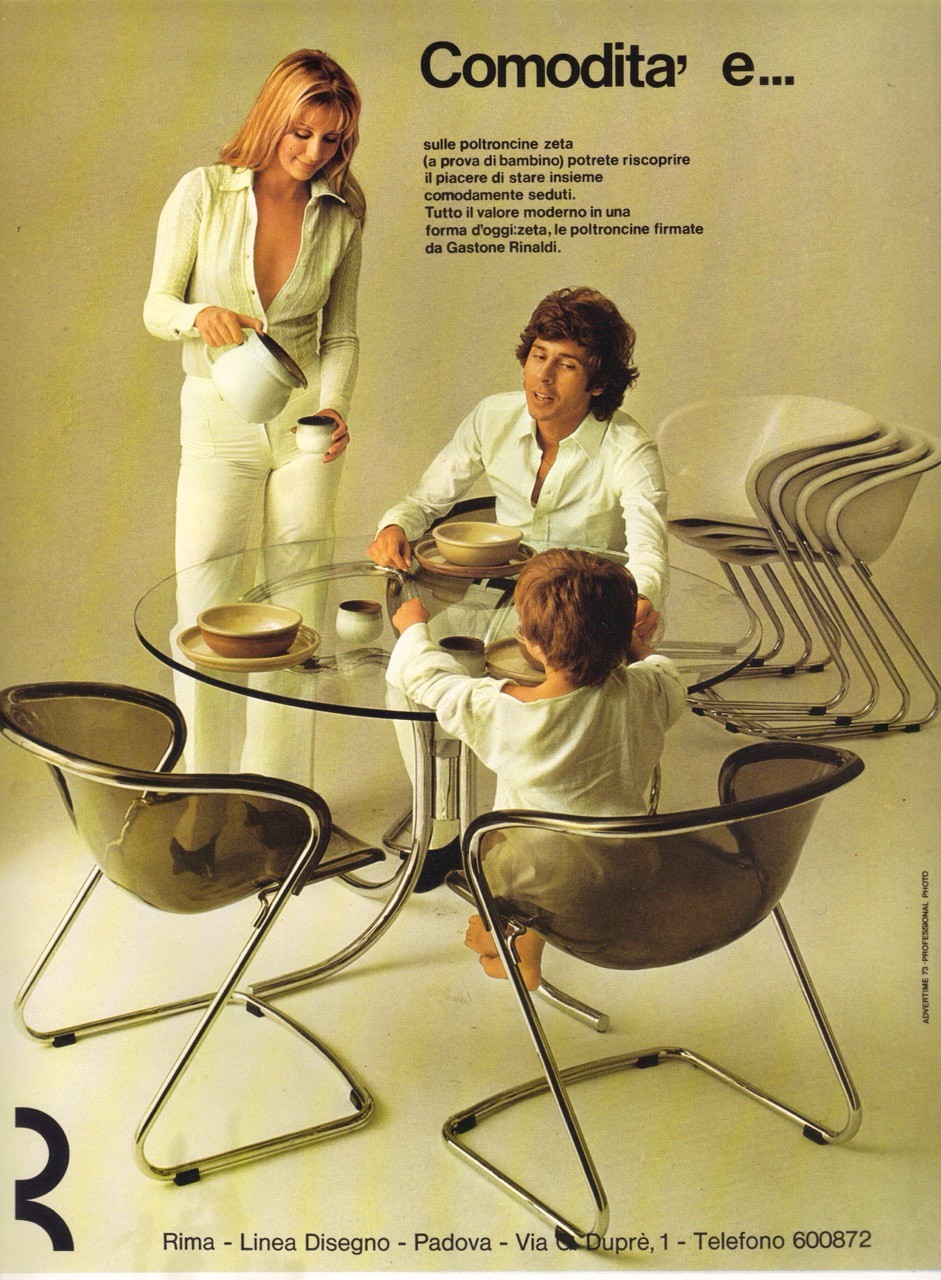
Rima also offered the Zeta P variant, featuring a plastic shell for the seat.
Functionality and Historical Success
In line with the pursuit of minimal footprint and "space saving", the Zeta armchair, variant P, is a stackable model, ideal for the rationalization of domestic and public spaces. The model met with significant international acclaim, as evidenced by its presence in the price lists for the American market in 1976.
Today, Zeta is considered an iconic piece of 1970s design, capable of transforming metal into a fluid and sculptural material through a design method that merges industrial innovation and functional rigor.