Du 43
Design: Gastone Rinaldi
Info
Year:
1953
Production:
Rima
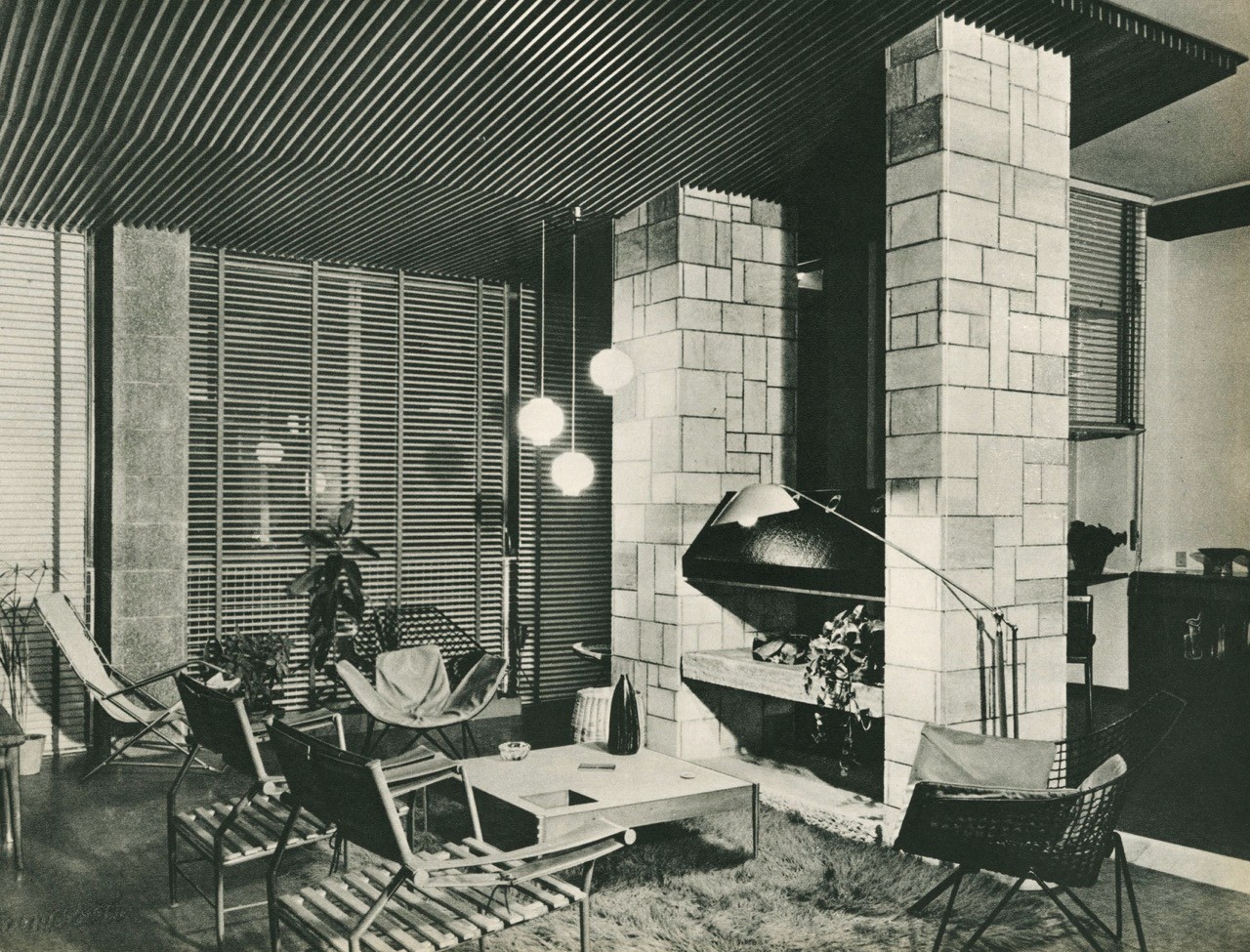
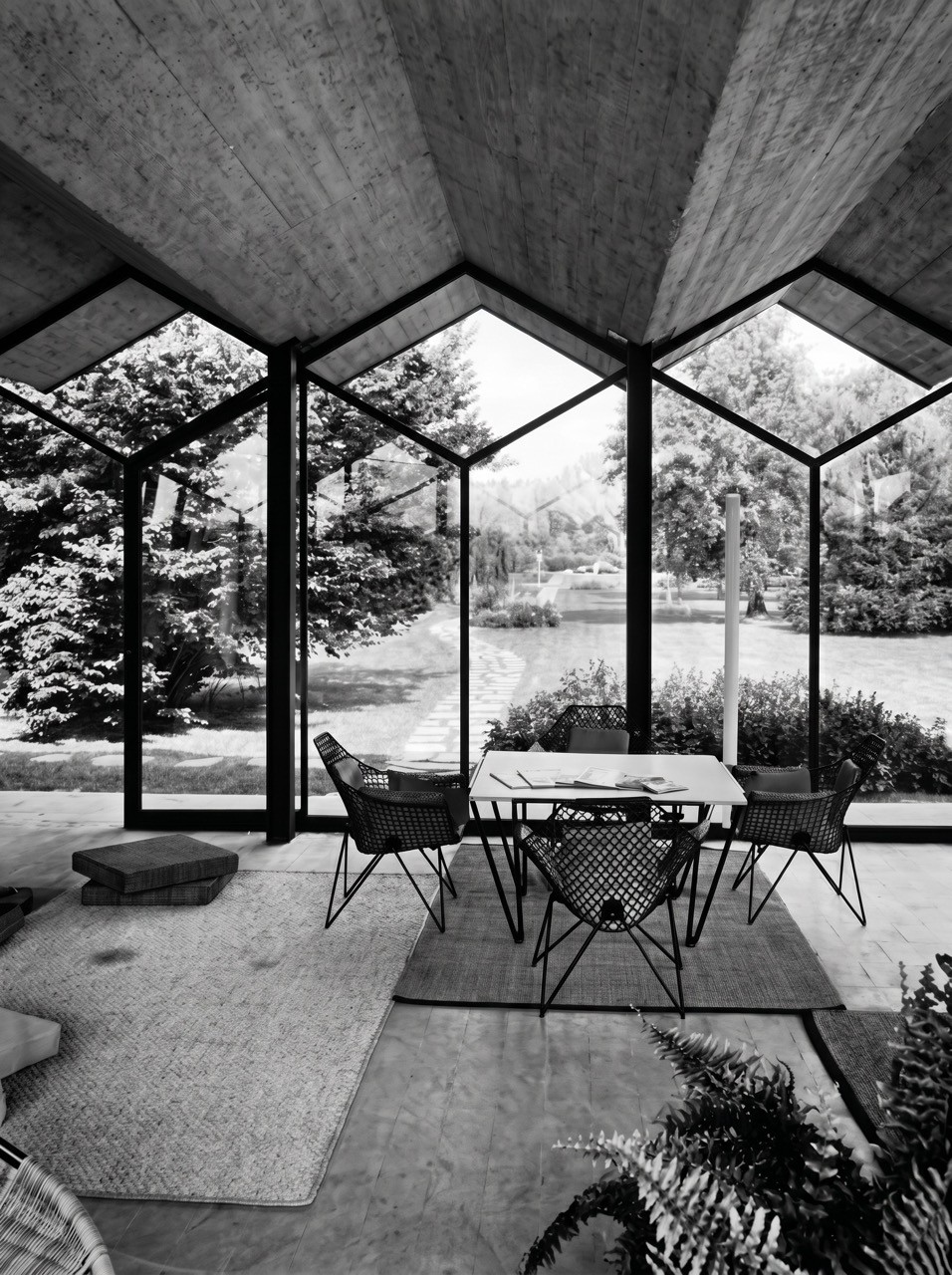
Designed in 1953 for Rima, the Du 43 armchair represents another successful outcome in the research of volume synthesis. It was awarded the Honorable Mention at the first edition of the Compasso d’Oro Award in 1954.
Technical Profile and Innovation
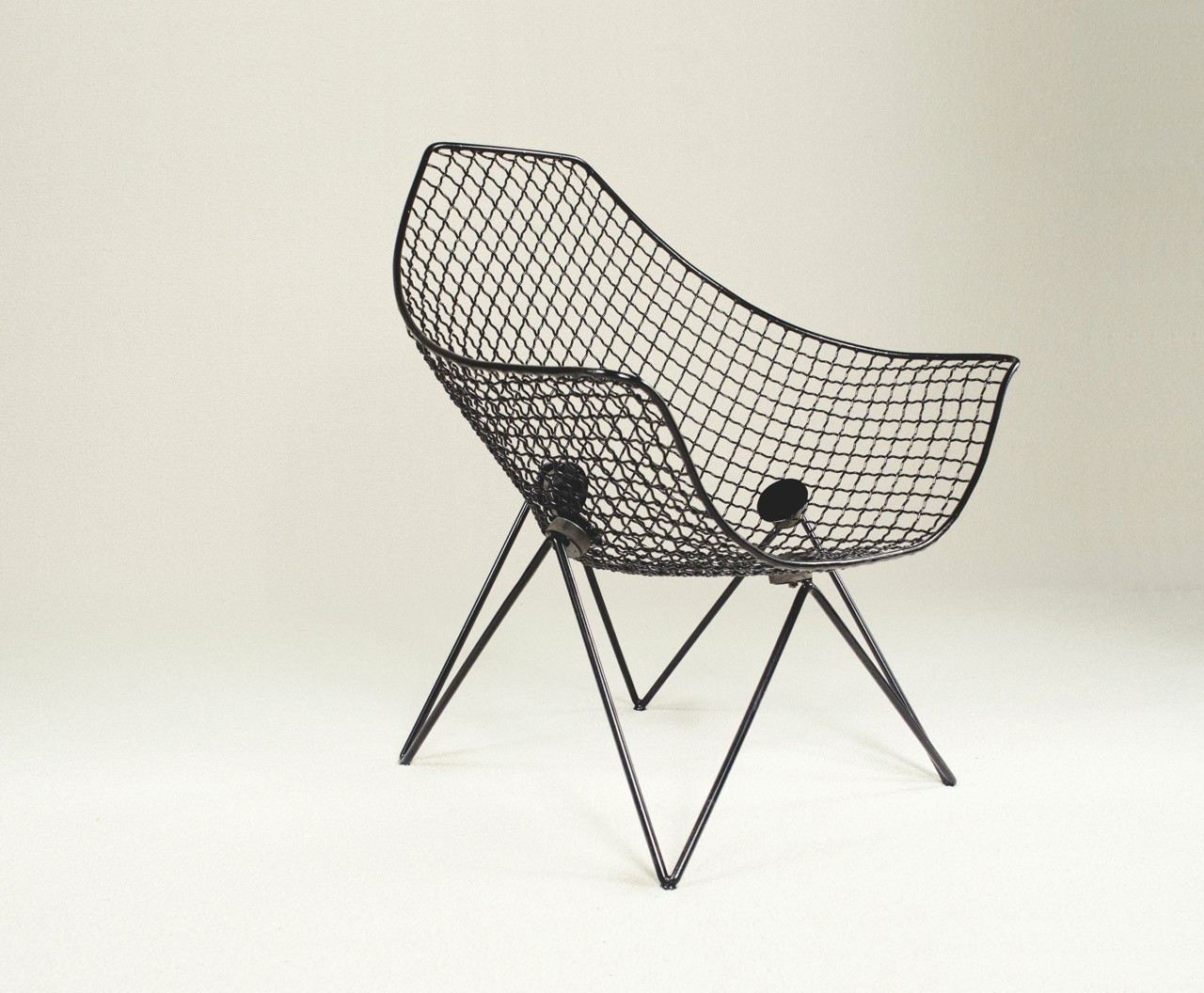
The object is the result of Rinaldi's investigation into transforming a two-dimensional surface into a self-supporting three-dimensional shell, a constructive principle similar to that of the Du 30 chair. The structure is composed of just two elements:
A shell formed by a single sheet of shaped metal mesh to constitute the seat and backrest.
A supporting frame in steel rod bent multiple times without interruption, defining the "V" legs equipped with rubber feet.
Design Methodology and Influences
Du 43 was born, so to speak, as the Italian alternative to the creations of American designers Charles Eames and Harry Bertoia. Avoiding the use of spot-welding technology, Rinaldi adopts a brilliant and empirical solution by employing a common fence wire mesh: a zigzagging weave free of welds which, once forced into the three-dimensional shape of the seat, generates an internal tension capable of ensuring the necessary structural stability.
The model stands out for its sculptural elegance and "transparency", which allows it to be crossed by air, light, and the surrounding environment. Regularly published in the magazine Domus, Du 43 testifies to a working method based on constant verification in the workshop, where technical innovation translates into a new functional elegance.